
In most areas, how many layers of asphalt shingles are allowed comes down to a simple rule: two layers max. So you can usually overlay once – over a single existing layer – but you can’t keep stacking layers forever. What people miss is that “allowed” depends on your local building department and how they enforce the adopted code. In practice, a third layer is typically a hard stop, and even where it’s tolerated it often brings baggage: extra weight, a wavier surface, shorter shingle life, and a bigger tear-off bill later.
In Vancouver, the headline doesn’t really change. The “two layers” expectation still holds. What changes is how often an overlay hides moisture damage, worn flashing, or soft decking until the old roof finally comes off. And “can I overlay?” isn’t the same as “should I overlay? If you’re already at two layers – or the roof is uneven, soft, or worn out – you’re usually making a roof repair vs replacement
decision, and tear-off is typically the right call.
What Building Codes Usually Allow (And Why the Limit Exists)
Building codes don’t limit layers to make reroofs harder. They limit them because extra layers change how the roof behaves. Asphalt shingles aren’t a thin skin – they’re a heavy, nailed system that depends on a solid deck, clean drainage, and reliable fastening. Every added layer increases dead load. One layer already spreads thousands of pounds across the framing. Add more and the margin shrinks. You may not see a “collapse,” but you can see sagging lines, drywall cracks, and framing movement – especially on older homes.
Overlays also create uneven surfaces. Old shingles curl, cup, blister, and build up around nails. Those bumps telegraph through the new roof. A wavy surface sheds water worse – water slows down, backs up, and works seams harder.
Fastening gets weaker too. When nails go through multiple layers, you can end up with short nail bite into the deck. That’s where loose shingles, lifted edges in wind, and nail pops come from.
And overlays can hide problems. Tear-off is when you actually see the deck and flashings – soft sheathing, rot at the eaves, tired valleys, wall flashing that was never right. Overlay doesn’t fix that. It covers it. Permits and inspections tend to key in on anything that looks like a compromised substrate.
In Vancouver, the hiding problem matters more. Long wet seasons don’t always show up as a dramatic leak. Sometimes it’s slow moisture that weakens decking and edges, then finally shows as staining later. Moisture control and ventilation as prevention show up in straightforward guidance like EPA’s moisture and mold materials.

The Typical Limit: Two Layers
The typical rule is simple: no more than two layers (or “applications”) of asphalt shingles on a roof. In plain language, if you already have one layer, an overlay might be permitted. If you already have two layers, you’re usually done stacking. Some homeowners hear “two layers allowed” and assume that means overlay is automatically fine. It doesn’t. The code limit is a ceiling, not a recommendation. A one-layer roof can still be a lousy overlay candidate if it’s badly worn or uneven.
A lot of jurisdictions also treat “recover” as something you do once. They’re trying to avoid the third layer problem entirely. That’s why you’ll hear roofers say, “You get one overlay, and then next time it’s tear-off.” That’s the practical reality in a lot of permit offices.
When a Tear-Off Becomes Mandatory
Tear-off becomes mandatory for two broad reasons: you’ve hit the layer limit, or the existing roof can’t serve as a stable base. The layer limit part is the easy one. If you’re already sitting on two layers, most building departments will require removal before new shingles go on. A third layer usually triggers a hard “no,” especially when a permit is pulled.
The condition-based triggers are where decisions get real. Codes generally require removal when the existing roof is water-soaked, deteriorated, uneven, or otherwise not a sound substrate. In the field, that often looks like:
- shingles that are curling badly or breaking under foot
- evidence of active leaks or chronic staining
- soft spots that suggest damaged sheathing
- valleys and flashings that are clearly at end-of-life
Even if the code language is broad, inspectors and contractors tend to read it the same way: if the existing roof will compromise the new roof’s performance, you remove it. And if you’re pulling a permit, expect that the inspector can require decking repairs once the roof is opened up. That possibility is part of the cost conversation, not some rare exception. In Vancouver, I’ll add one practical note without changing the rule. If you’ve had repeated “small” leak repairs around valleys, sidewalls, or penetrations, that’s often a sign the details need a proper reset. Those are the exact areas overlaying tends to leave behind.
How to Confirm the Limit in Your Area
The only answer that matters is what your local authority having jurisdiction enforces. In Metro Vancouver, that usually means your specific municipality’s permitting office – not a generic “BC rule” you found online.
Start with the City of Vancouver permits and building resources if you’re inside Vancouver proper. If you’re in Burnaby, Surrey, Richmond, North Vancouver, West Vancouver, Coquitlam, or any other municipality, go to that city’s permitting page and look for reroof guidance, permit handouts, or adopted code references.
If the site doesn’t say much, call the permit counter and ask two direct questions:
- “Do you allow asphalt shingles to be installed over an existing layer?”
- “What is the maximum number of layers allowed before tear-off is required?”
Then ask one follow-up that matters more than people expect:
- “If I pull a reroof permit, will the inspector require tear-off if the roof surface is uneven or the deck is damaged?”
That last one gets you past the generic “two layers” answer and into how they actually enforce it. Some offices are strict on overlays. Some allow them on paper but routinely fail them in the field if the roof looks tired. If you’re in an HOA or a condo setting, also check the governing documents and insurance requirements. They can effectively ban overlays even if the building department would permit them.
How to Tell How Many Layers You Already Have
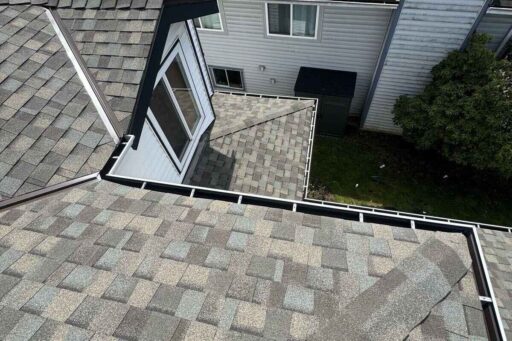
You don’t need to peel the roof apart to get a decent read, but you do need to look in the right places. Start at the roof edges where layers show. Along the rake edge (the sloped gable edge) or at the eaves, you can sometimes see distinct thickness lines. One layer usually looks like a clean build-up. Multiple layers leave a thicker, stepped edge.
Roof penetrations can also give hints. Around plumbing vents or roof-to-wall transitions, you may see stacked edges or multiple shingle planes that look “built up.” Valleys can show it too, especially if the valley metal was buried and then re-buried. Inside the home, the attic can add context – old nail points, patched decking, or repeat staining doesn’t confirm layers, but it often tracks with a roof that’s been re-covered without fixing the root issues.
One practical field check roofers use is the “feel” underfoot. Multiple layers often feel softer and less crisp than a single tight layer over solid decking. Not proof on its own, but combined with thick edges and visible steps, it’s a strong indicator.
In Vancouver, watch how “soft” shows up. A roof can look fine from the street and still have weak decking around eaves and valleys after years of wet loading. You’re not trying to diagnose the whole roof here – just whether you’re dealing with one layer or a stack, and whether the base feels solid enough to trust.
If you need a definitive answer for permitting or resale, a roofing contractor can usually confirm layer count quickly by checking visible edges and typical build-up points. They’re not doing a tear-off. They’re verifying how the roof is assembled.
When an Overlay Is Allowed (And When It’s a Bad Idea)
Overlaying can be a reasonable choice when the roof is a clean, stable base and the goal is simply to get more life at a lower upfront cost. It’s also a common choice when scheduling is tight and homeowners want less mess.
But overlays don’t reset the roof system. Failing flashings stay in place. Soft decking doesn’t get replaced. Ventilation problems that keep moisture hanging around also remain – and the moisture side of that is exactly what EPA keeps hammering on in indoor moisture guidance.
If you overlay onto a roof that’s already distorted, the new shingles are basically forced to follow that distortion. That usually shows up as a roof that looks older than it is and wears out faster than expected. In Vancouver, the other thing I watch is how long moisture stays in the system. Not just rain on top. Moisture in the attic, around the eaves, near shaded roof planes. A second layer doesn’t help drying. It can slow it down.
Conditions That Usually Must Be Met
Most overlays that turn out well share the same baseline conditions. You’re typically looking for a roof with one existing layer, lying relatively flat, with no active leaks and no signs that the deck is compromised. The shingles should still be stable enough that they aren’t curling aggressively or breaking apart when handled.
Flashing condition matters more than homeowners assume. If the valleys, chimney flashing, or sidewall step flashing are near end-of-life, overlaying locks you into partial fixes. You can patch details, but you’re not rebuilding the transitions the way you can during tear-off.
Ventilation is another silent driver. If the attic is damp, humid, or poorly balanced (not enough intake at the eaves or not enough exhaust near the ridge), a new layer of shingles doesn’t solve that. The roof assembly stays “wetter” longer. Over time, that pushes problems into the deck and fasteners, not always into a dramatic ceiling leak you notice right away.
Finally, you want to be confident that fasteners can achieve proper deck penetration. With multiple layers involved, that becomes a real constraint. If fastening performance is questionable, wind issues later shouldn’t surprise anyone.
Red Flags That Make Overlay Risky
There are a few red flags that make me push toward tear-off even when an overlay might technically be allowed.
- Soft spots are the big one. If the roof surface feels spongy or the attic shows signs of moisture damage, you want the deck exposed. Covering that up is how small problems become structural repairs later.
- Visible curling, cupping, or heavy blistering is another. Those are signs the roof is no longer a flat substrate. Overlaying over distortion usually produces a wavy new roof and puts stress on shingle seals and edges.
- Leak history matters. If there’s been chronic staining, repeated repairs, or ice buildup issues, overlaying tends to repeat the same story. The root cause is often flashing, ventilation, or deck condition – things you address more completely when you strip the roof.
Also, if you’re already at two layers, an overlay is usually off the table for permitting and for common-sense reasons. Even if someone says they can do it, you’re taking on extra load, reduced fastening performance, and a more expensive future tear-off. The money you “save” often comes back as a bigger bill later.
In Vancouver specifically, the roofs I see that regret an overlay usually have the same pattern. Lots of patch history around valleys and sidewalls, a deck that’s been quietly softening, and a roofline that starts to look wavy sooner than it should. Nothing “mystical” – just moisture, time, and layers.

Tear-Off vs Overlay Costs (What Changes With Multiple Layers)
The cost difference comes from labour, disposal, and uncertainty. Overlay is typically cheaper upfront because it skips tear-off labour and dump fees. It also tends to be faster, which can reduce jobsite disruption. That’s the appeal.
Tear-off costs more because you’re paying for removal, debris handling, and the time it takes to protect landscaping and clean up. But tear-off also creates an opportunity: you can replace failing flashings properly, fix decking issues, and install required water protection details in a cleaner way.
Multiple layers change the math because every extra layer adds time and disposal weight. A two-layer tear-off is heavier, messier, and slower than a one-layer tear-off. If there’s a third layer (even in places where it exists), removal costs climb again, and decking repairs become more likely because the roof has had more time to trap moisture and hide damage.
In Metro Vancouver, a couple real-world constraints show up more often. Access can be tight, steep driveways and narrow lanes make bin placement harder, and scheduling around municipal inspections can stretch timelines.None of that changes the core comparison, but it does change how the job feels and how costs stack up – especially once you compare it against local baselines like how much does a new roof cost in Vancouver.
What Usually Drives the Difference
Here’s a practical breakdown of what usually drives the difference:
| Cost Driver | Overlay (Recover) | Tear-Off (Remove & Replace) |
|---|---|---|
| Removal labour | Minimal or none | Significant; increases with each existing layer |
| Disposal / dump fees | Low | High; increases with debris weight and layers |
| Dumpster / bin rental | Sometimes avoided | Common line item |
| Deck repair exposure | Often not discovered | Discovered and fixed while open |
| Flashing reset (valleys/walls/chimney) | Limited; may be partial | Easier to rebuild correctly |
| Permit/inspection risk | May fail if roof is uneven or damaged | More straightforward to pass once repaired |
| Future replacement cost | Higher later (more layers to remove) | Lower later (resets to one layer) |
If you’re deciding based purely on short-term cash, overlay can win. If you’re thinking about resale, long-term durability, and avoiding a surprise deck repair later, tear-off often wins even when it costs more today.
The key point with multiple layers is this: you don’t just pay more later – you pay more later and you take more risk now. That’s why many experienced contractors hesitate to overlay roofs that are already borderline.
Conclusion
Most jurisdictions treat two layers as the maximum for asphalt shingles, and a third layer is where tear-off becomes the normal requirement. The limit exists for practical reasons: weight, fastening performance, surface irregularities, and the fact that overlays can hide deck and flashing problems. For Vancouver, the smart move is still the same sequence. Confirm what your specific municipality enforces, then evaluate the roof you actually have – not just what the code might allow. If the roof is flat, dry, stable, and only one layer deep, an overlay can be reasonable. If the roof is distorted, has leak history, feels soft, or is already at two layers, tear-off usually saves you trouble, even if it costs more upfront.