
What is EPDM rubber roofing? This durable roofing solution comes from ethylene propylene diene monomer, and its popularity keeps growing with good reason too. A properly installed EPDM roof can protect your property for 30 to 50 years. This makes it one of the longest-lasting roofing options you can get.
EPDM rubber roofing material delivers exceptional value compared to other types. The cost ranges from $4 to $10 per square foot for an EPDM roofing membrane. This price substantially beats slate at $20 to $25 per square foot and metal at $7 to $11 per square foot. The versatile EPDM membrane roofing also comes in black, white, gray, and tan. You get aesthetic choices while keeping all the practical benefits.
This piece will walk you through everything about EPDM rubber roof systems. You’ll find details about its chemical makeup, installation methods, and Vancouver-specific costs. We’ll also cover maintenance tips to extend your roof’s life. Many property owners choose this rubber roof material, and you’ll soon see why.
What is EPDM Rubber Roofing?
EPDM rubber roofing is 50+ years old and stands as one of the most reliable single-ply roofing systems in North America. Learning about this material and how it works will help you make an informed decision about your roofing options.
Definition and chemical composition
EPDM (ethylene propylene diene terpolymer) is a synthetic rubber material we created from ethylene, propylene, and a small amount of diene. The name shows its chemical makeup – these three key ingredients combine to create a remarkably durable membrane. EPDM has about 3-9% of non-conjugated diene, and commercial products usually contain diene levels between 2 to 12%.
This specialized rubber roofing membrane comes to life through polymerization of raw materials, followed by vulcanization to achieve the best physical properties. Commercial EPDM rubber contains 45 to 75 percent ethylene, and products with 55-65% ethylene content are partially crystalline.
You’ll find EPDM roofing in black, white, gray, and tan. It comes in rolls 7.5 to 50 feet wide and thicknesses of 45, 60, and 90 mils. Leading manufacturers like Carlisle SynTec, Firestone Building Products, Johns Manville, and GenFlex have refined their production methods. Some facilities now use advanced extrusion techniques instead of traditional calendering.

How it compares to natural rubber
EPDM rubber roofing material is made synthetically, unlike natural rubber that comes from rubber trees. This basic difference gives EPDM several advantages over natural rubber, especially outdoors.
EPDM resists environmental factors better than its natural counterpart. Natural rubber breaks down under sunlight, ozone, and weather, while EPDM stays strong in these conditions. EPDM also handles heat better, working in temperatures up to 350°F. This is a big deal as it means that it outperforms natural rubber’s 175°F limit.
Natural rubber does shine in some areas. It resists tearing better, sticks to metal more effectively, and shows greater resilience than EPDM. These strengths explain why each material works best in different situations.
Common applications in roofing
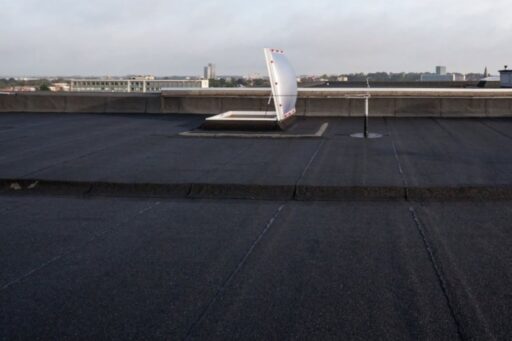
We used EPDM mostly for low-slope or flat roofing, though it works well on steep slopes and unique structures like domes and barrels. This EPDM membrane roofing can be installed three ways:
- Fully adhered (glued down completely)
- Mechanically attached (fastened at edges)
- Ballasted/loose laid (weighted down with rocks or pavers)
This rubber roof material works in many conditions. Contractors can install it above or below insulation and use it for below-grade waterproofing. It resists UV radiation, extreme temperatures, and moisture absorption, making it perfect for exposed and concealed assemblies.
Building owners in Northern climates love EPDM because it absorbs heat and keeps interiors warm during cold months. EPDM lasts up to 40 years when properly installed in the right conditions. One of the key advantages of EPDM roofing material is how easy it is to repair. In many cases, simple patching is enough to stop leaks, making maintenance straightforward throughout the roof’s service life.
EPDM has proven itself as an economical roofing solution that balances performance with practicality over the last several years.
Pros and Cons of EPDM Roofing
You should think over both the strengths and weaknesses of an EPDM rubber roof before making an investment. This roofing solution might not work for every project, even though many commercial and residential buildings use it. Let’s get into the pros and cons to help you decide if EPDM is right for your Vancouver property.
Advantages: durability, cost, flexibility
EPDM rubber roofing material shines brightest in its amazing longevity. A well-installed EPDM roof that’s properly taken care of can last up to 50 years. Several factors make it this durable:
The material resists UV radiation by a lot, which cuts down on sun damage. It also stands up to winds and hail up to three inches wide. Buildings with well-maintained EPDM roofs stay leak-free throughout their life.
EPDM roofing membrane offers budget-friendly options for your project. You’ll pay several dollars less per square foot compared to other materials. Installation runs between $5.00 and $10.00 per square foot, including materials and labour. Vancouver building owners watching their budget will find this appealing.
Energy efficiency is another big plus. EPDM keeps buildings cool in summer and warm in winter. Yes, it is especially helpful in northern climates like Vancouver, where black EPDM helps snow and ice melt faster. This reduces roof loads and improves drainage. The membrane stays flexible in temperatures from -45°F to 300°F.
An EPDM membrane roofing system needs little upkeep. You’ll just need regular checkups and occasional cleaning. Small holes or punctures are quick to fix, which adds to its value over time.
Disadvantages: puncture risk, shrinkage, aesthetics
What is epdm roofing material comes with some drawbacks you should know about. The biggest problem is how easily it can puncture. Most EPDM installations don’t have reinforcement, which makes them prone to damage. Falling branches, dropped tools, or animals can tear holes in the membrane. Repairs are simple, but water damage can cause big issues if left unchecked.
Shrinkage creates another headache. EPDM can shrink up to 4% as it ages, which makes it pull away from the substrate instead of staying flat. This “tenting” makes the roof more likely to get damaged. Modern manufacturing has improved this issue, but older ballasted roofs still don’t deal very well with it.
Rubber roof materials might not look great to everyone. The black surface can be an eyesore, especially on low roofs where people in taller buildings can see it. This matters in Vancouver’s design-conscious market, where looks count.
The quality of installation makes or breaks performance. Poor installation speeds up shrinkage and leads to water pooling that wears out the roof faster. Even small mistakes in bonding can let moisture seep in and cause leaks. You’ll need contractors who know Vancouver’s climate to get the most life from your roof. Rubber roofing works best on flat or low-slope roofs. Buildings with steep or complex roof designs should look at other options.
Installation Methods for EPDM Roofs
The right installation of your rubber roofing material is a vital part of making it last longer and work better. Your choice of method affects both the cost and how well your roof performs over time. Let’s get into the three main ways to install these roofs and see which one works best in Vancouver’s climate.
Fully adhered installation
A fully adhered system bonds the membrane roofing directly to the substrate with special adhesives. This premium technique creates a completely attached system with excellent wind resistance.
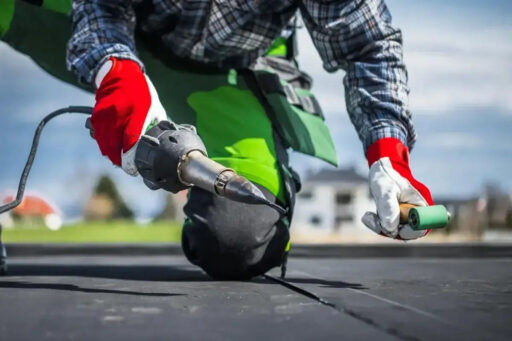
Contractors start by cleaning the substrate. They apply bonding adhesive to the membrane’s underside and the substrate. The membrane goes into place once the adhesive becomes tacky. Special rollers apply pressure to the entire surface to remove air pockets and create a solid bond.
This method gives you the best wind-uplift resistance and works on any slope – even vertical surfaces. Roofs up to 250 feet high can use this method, and it usually comes with warranties lasting up to 30 years.
Mechanically attached installation
This method uses plates and fasteners to secure the rubber roof through the insulation into the structural deck. The fasteners hold everything in place at specific intervals, mostly along the seams where membranes meet.
You get good wind resistance at a lower cost than fully adhered systems. Buildings of all sizes can use this method, even those with steep slopes. The lightweight system installs quickly and works great in areas with moderate wind concerns.
Ballasted installation
Ballasted systems let the what is epdm roofing material membrane lay loose over the substrate without adhesives or fasteners in the field area. The system stays in place using weight from smooth river rock, crushed stone, or concrete pavers.
These systems need at least 10 pounds of ballast per square foot, based on wind requirements. Roofs can’t slope more than 2 inches per horizontal foot. Large new construction projects work best for this approach, but the structure must support an extra 10-12 pounds per square foot.
Which method is best for Vancouver climate?
Fully adhered systems work best in Vancouver’s rainy and sometimes windy conditions. The complete bond stops water from getting under the membrane – a big plus in Vancouver’s wet weather.
Mechanically attached systems make a good choice if your building can’t handle ballast weight or you need quick installation. Both options protect against Vancouver’s changing temperatures, since rubber roof materials stay flexible from -45°F to 300°F.
The timing of your installation matters a lot in Vancouver. You should schedule the work during dry weather so adhesives can cure properly and membranes position correctly.

EPDM Roofing Costs in Vancouver
You should carefully plan your investment in an EPDM rubber roofing system. Let’s look at typical Vancouver costs to help you budget your roofing project better.
Cost per square foot
A standard EPDM installation costs between $4.25 and $9.25 per square foot. This means you’ll pay $425.00 to $9,625.00 per square (100 square feet) for a single-story house.
Materials make up about 40% of what you’ll spend. The epdm roofing membrane costs $0.50 to $3.50 per square foot. Labour takes the bigger share at $3.00 to $7.00 per square foot, roughly 60% of your total cost. A typical 1,500-square-foot roof installation ranges from $6,000 to $15,000. Your membrane’s thickness plays a big role in the final price.
Comparison with asphalt, metal, and slate
Let’s see how what is epdm rubber roofing costs match up against other options in Vancouver. Asphalt shingles are the most affordable choice at $3.00 to $5.00 per square foot installed. Metal roofs cost more, running between $8.00 and $14.00 per square foot. Slate roofing tops the price list at $15.00 to $30.00 per square foot.
EPDM rubber roofing material sits right in the middle – it costs more than asphalt but less than slate. The 25-35 year lifespan makes it a great value over time.
Factors that affect pricing
Here’s what affects your final EPDM membrane roofing cost in Vancouver:
Membrane thickness makes a big difference in material costs. You’ll pay more for thicker membranes (90 mil) than thinner ones (45 or 60 mil). Your choice of installation method – fully adhered, mechanically attached, or ballasted – changes both labour needs and material amounts.
Complex roofs cost more. Extra angles, skylights, vents, or HVAC units need detailed work and extra materials. Your contractor’s experience matters too – skilled pros might charge more but they do better work with fewer issues down the road.
Prep work can add unexpected costs. Fixing or removing your old roof adds to the price. High-quality insulation and extended warranties cost more upfront but could save you money later.
Durability and Maintenance Tips
EPDM rubber roofing systems last a long time, but their durability depends on good maintenance throughout their life.
Good installation and regular maintenance help membrane roofing last 40 to 50 years. Some roofs keep performing well even longer when owners take good care of them. This is a big deal as it means that these roofs offer better value than many other options.
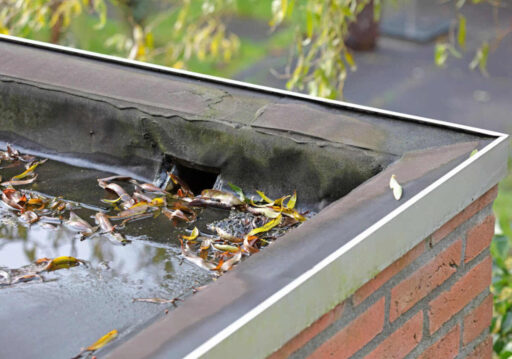
Rubber roof materials can fail early despite their toughness. Sharp debris and foot traffic cause punctures. Weather stress leads to tears, while trapped moisture creates blisters. The membrane starts pulling away from edges and penetrations as it shrinks over time. Standing water that stays more than 48 hours makes small problems much worse.
Seasonal maintenance checklist
Your roof needs regular checkups just like wellness visits. Vancouver’s climate demands:
- Spring: Look for winter damage, membrane shrinkage, separated seams
- Fall: Fix summer damage, remove debris, get ready for winter
- After storms: Check for punctures, lifted seams, and pooled water
A clean rubber roofing material prevents moisture-trapping debris buildup. Stubborn dirt needs just a soft-bristle brush and mild soap solution.
When to think about repairs or replacement
Small punctures or single seam failures usually need simple repairs. You clean the damaged area first. Then apply compatible EPDM primer and seal gaps with quality lap sealant. Your roof might need replacement if you see lots of cracks, multiple failed seams, or it’s 25-30 years old. You’ll need professional help with multiple punctures, tears bigger than 3 inches, or many failed seams.
Conclusion
EPDM rubber roofing remains a practical, long-term solution for many properties. It offers strong durability, performs well in extreme temperatures, and delivers solid value compared to higher-cost options like metal or slate. With proper installation and routine maintenance, an EPDM roof can protect a building reliably for decades.
Like any roofing system, EPDM requires attention to punctures and regular inspections, especially after storms. These considerations are minor compared to its proven performance and ease of repair.
If you’re considering EPDM roofing for your property, Marks Roofing can help you determine whether it’s the right fit and recommend the best installation method for your building. Contact us today to request a free installation quote and get clear, professional guidance before you move forward.