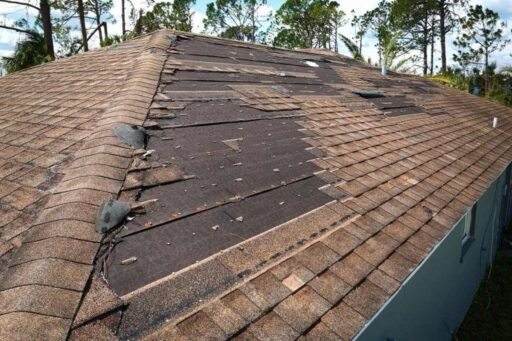

Most of the time, yes – you can stay home during a roof replacement. A lot of homeowners do. But “safe” doesn’t mean “quiet,” and it doesn’t mean your day runs like normal, especially outside.
When we talk about safety, we’re mainly talking about ground-level risk. The roof is the work zone, but the danger is usually below it. During tear-off, shingles, nails, and small debris come off fast, and even with tarps and a careful crew, things can bounce or get pushed b wind. That’s why a real jobsite has a restricted perimeter – areas you simply don’t walk through while work is active.
The second reality homeowners underestimate is noise and vibration. Tear-off isn’t background noise – it’s impact noise, and in some houses you’ll feel it. If you work from home, have a baby who needs a nap, or have pets that panic, “safe” can still be a rough day.
So here’s the contractor verdict from what we see on real jobs: often yes, but not always. The decision usually comes down to three things:
- Can you follow perimeter rules without slipping up?
- Do you have household factors that make disruption a bigger issue (kids, pets, sensitivities, remote meetings)?
- Is the job likely to open up surprises like decking replacement or extended tear-off?
If the answer is “yes, we can control the perimeter and handle the disruption,” staying home is usually realistic. If you’re already thinking, “I’m not sure I can keep the kids inside,” or “my dog bolts when the door opens,” leaving for the worst phase is often the smarter call.
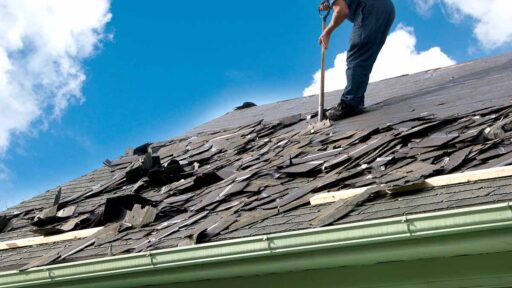
What Actually Happens During Roof Replacement
Roof replacement looks simple – old off, new on – but it happens in phases, and each one feels different inside the house. First is setup: materials get staged, a dumpster or trailer is placed, tarps go down, and ladders/access points are set. Then tear-off starts. The old shingles and underlayment come off fast, it’s the loudest part, and debris risk is highest.
After that, the crew checks the roof deck. If it’s solid, they dry-in with underlayment, rebuild key details (flashing, penetrations, ventilation), and install the new roofing. It’s still noisy, just more predictable than tear-off.
Last is cleanup and verification: debris collection, sweeping, magnetic nail pickup, and a yard/driveway check. That’s the phase people underestimate – because the small sharp stuff is what shows up later.
The main idea: the day isn’t one constant level of disruption. Tear-off is the peak, install is steadier, and cleanup decides how safe the ground is afterward.
The Real Risks of Staying Home (And What’s Overblown)
If you’re deciding whether to be home, it helps to think like the person running the site. The biggest issues aren’t complicated. They’re the same few things we manage on every occupied-home replacement: perimeter control, sharp debris, dust pathways, and noise.
Falling debris and ground perimeter rules
This is the #1 safety issue. During tear-off, material comes off the roof continuously, and even with tarps, chutes, and good technique, gravity and bounce still win sometimes. The rule is simple: stay out of the drop zone. Don’t walk under eaves, don’t squeeze past the dumpster, and don’t “just grab something” from the side yard while work is active. On steeper or taller roofs that perimeter usually has to be wider, which is why roof pitch matters comes up more than homeowners expect.
Indoors you’re generally fine – the real risk is crossing the jobsite perimeter at the wrong time. Most issues happen when someone tries to “sneak by” while tear-off is active. If you’re staying home, you want one clear entry route that the crew agrees is safe. Everything else is off-limits until they say otherwise.
Nails, sharp debris, and hidden cleanup risk
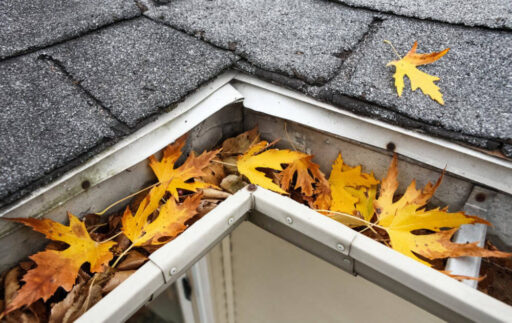
Nails are a bigger issue than most homeowners expect because they don’t always land where you think. They bounce off concrete, disappear into gravel, and get caught in garden beds and along fence lines, and you can still find a stray nail even after a magnetic sweep. Staying home changes behavior, because you’re more likely to step outside “for a minute” or let the dog out quickly. That’s exactly how punctures happen – shoes off, quick step, wrong spot.
Most crews do a thorough cleanup, but one pass isn’t always the final pass, especially with landscaping, gravel, and wind.
Dust/debris pathways (attic, vents, soffits)
Dust is the sneaky one. People assume it comes in through open windows, but the more common pathway is the attic and its connections – soffit intakes, attic hatches, older venting gaps, and the little air leaks real houses have. On older homes, tear-off vibration can shake attic dust loose, and stored items can end up with a film of grit afterward. The basic “control the contaminant and don’t pull it through the building” approach is consistent with Health Canada indoor air quality guidance, even if we’re talking here about practical homeowner-level steps.
Noise/vibration: what’s normal vs what’s not
Homeowners consistently underestimate how loud tear-off is. It’s not just “roofers working” – it’s scraping, prying, impact, and debris hitting a trailer or dumpster, and it will punch right through calls and naps. Normal is sharp bursts of noise, steady pounding, vibration you can feel in some rooms, and intermittent compressor/nail gun sounds during install. Not normal is sustained shaking that feels extreme, debris hitting windows repeatedly, or anyone being allowed to move through the drop zone while material is coming off.
If something feels unsafe, stop using that area and talk to the crew lead, because a good crew would rather adjust the plan than have you in the wrong place.
Decision Table (Stay vs Leave Scenarios)
| Scenario / Risk Trigger | What It Usually Means |
Stay vs Leave Recommendation
|
| Single-layer tear-off, clear perimeter, safe entry route | Predictable jobsite with manageable hazards |
Stay (with perimeter rules)
|
| Multiple layers or messy tear-off expected | Longer loud phase, more debris volume |
Leave for tear-off day
|
| Decking replacement likely or uncertain | More invasive work, dust risk, longer timeline |
Leave (at least that day)
|
| Weather instability during tear-off | Open-deck exposure risk, schedule stress |
Leave or plan flexible exit
|
| Kids who can’t reliably follow boundaries | Perimeter control becomes fragile |
Leave (safety-first)
|
| Pets that panic or bolt at noise/doors | Escape risk spikes |
Leave or board pets
|
| Severe dust/odour sensitivity (asthma, migraines) | Comfort + exposure becomes a real issue |
Leave during tear-off/dry-in
|
| Critical WFH meetings on day 1 | Tear-off noise will win |
Leave or work offsite
|
When Staying Home Is Usually Fine
Staying home works best when the job is predictable and the household can respect jobsite boundaries without constant friction. In those situations, being home is mostly an inconvenience – not a safety problem.
Typical single-layer tear-off with controlled perimeter
If you have one layer of roofing, decent access, and no known deck issues, the project is usually straightforward. Tear-off is still loud, but it’s often contained to a clear zone: dumpster location, ladder access points, and the sides of the house where material is coming down. This is the “green light” situation as long as you agree on two rules: the perimeter is real, and you don’t improvise routes while the crew is actively tossing debris.
Occupancy plan that works
The most practical plan is simple: pick a safe room on the opposite side of the house from the main work zone, and plan to stay there during the noisiest periods. Keep windows closed during tear-off if you’re sensitive to dust, and try not to run in and out all day. Access expectations matter too. The crew may need driveway space, may stage materials near an entry, and may need you to avoid certain doors. If you can live with “this door only” for a day, staying home is usually fine.
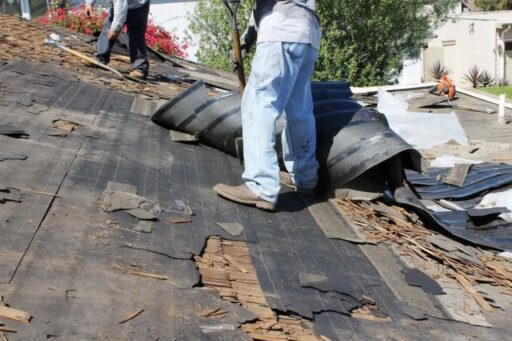
What to ask the crew lead the morning of
This is where jobs go smoother. Five quick questions give you a real plan:
- “Where is the drop zone today?”
- “Which door should we use as our safe entry?”
- “When does tear-off happen, and when does it taper off?”
- “Do you expect deck repairs once it’s opened up?”
- “When is the first cleanup pass so we can let pets out safely later?”
Those questions aren’t picky. They show you’re trying to stay safe and stay out of the crew’s way. That’s exactly what you want on an occupied-home replacement day.
When You Should Leave the House
Some situations aren’t worth trying to “tough it out.” This isn’t about being nervous. It’s about recognizing when the jobsite is going to be too dynamic to manage safely or comfortably as an occupied space.
Decking replacement or structural repair likely
If there’s any real chance the crew will be replacing decking – soft spots, known leaks, older roof with questionable sheathing – plan on leaving. Deck work changes the pace, increases vibration, can increase dust movement, and almost always stretches the timeline. It also changes the homeowner experience fast. What you thought was a one-day replacement can turn into a longer day with more uncertainty. If you can remove yourself from that, the whole job tends to go smoother.
Multiple layers / messy tear-off conditions
Multiple layers make tear-off heavier, louder, and longer. There’s more debris volume, more nails, and a higher chance of scatter, even with great protection. If you’re not sure what you’re dealing with, it’s worth checking how many layers of asphalt shingles are allowed in your area, because “one layer vs two” changes the whole feel of the day.
If you’re debating it, here’s the straight contractor answer: leave for the tear-off day and come back when the roof is dried-in and the worst of the debris is already under control. You’re not missing anything important by being away for the loudest, messiest part. And you lower the chances of somebody wandering into the wrong zone at the wrong time.
Weather instability and open-deck exposure windows
Roofing is weather-dependent. Even with a good forecast, wind and surprise showers happen. If the job involves any open-deck time and the weather looks unstable, staying home can be stressful – because you’re listening for every sound and watching the sky. Leaving doesn’t change the crew’s responsibility to protect the home. It just takes the pressure off living next to an active, weather-sensitive work zone.
High-risk household situations
If you have an infant who has to nap, an elderly family member with mobility limits, or someone with severe sensitivity to noise, dust, or odours, the smarter move is usually to leave – at least for the loudest phase. That isn’t overreacting. It’s matching the environment to the household. Tear-off is a short event in the life of the roof, but it can be a very long day for the people inside the house.

Kids, Pets, and Work-From-Home: What Changes the Decision
This is where the decision usually gets made. Most adults can power through noise and inconvenience for a day. Kids, pets, and remote work add constraints that don’t negotiate.
Pets: stress + escape risk + containment plan
Pets often react worse than people expect – this is where pets usually struggle. Dogs can panic from impact noise. Cats can hide, then bolt when a door opens. Birds and small animals can be extremely sensitive to vibration and sound. If you stay home with pets, you need a containment plan that doesn’t depend on “we’ll be careful.” Pick a closed room, crate if appropriate, white noise if it helps, and avoid opening doors during active work. If your pet is a known runner, boarding or leaving is usually the safest option.
Also plan for bathroom breaks. Don’t let the dog out into the yard during tear-off. Wait until the crew says the ground is clear and the first cleanup pass is done.
Kids: access control + nap disruption reality
Kids don’t understand perimeters, and they don’t respect “just for today” rules the way adults do. If you can’t guarantee that a child stays away from doors, windows, and the yard, leaving is often the best call. Nap disruption is the other reality. Tear-off noise isn’t steady like a fan. It’s unpredictable impact. If naps are non-negotiable in your household, staying home on tear-off day is usually a losing bet.
WFH: meetings, calls, and the “tear-off day” problem
If you work from home and your schedule is flexible, you can often stay – especially after tear-off. But if you have key calls or presentations on day 1, plan to work offsite. Even the best crew can’t make tear-off quiet. Nail guns and compressors are one thing. Tear-off is another. If you must be heard clearly, treat tear-off day like a travel day.
A realistic compromise some homeowners use: stay home during setup and later install phases, but work offsite during tear-off. That’s often the sweet spot.

How to Prepare If You’re Staying Home
If you’re staying home, prep is what makes it manageable. Move vehicles early so the dumpster/trailer can be placed, and keep the street clear if access is tight. Clear or move anything fragile in the drop zone so it can’t get hit and debris has fewer places to hide.
If you have attic storage, cover items near the hatch and expect some dust shift from vibration – older homes are worse for this. Keep windows closed during tear-off, and don’t pull outdoor air in right beside the work zone if you’re sensitive. Inside, secure wall decor and anything that rattles, and lock in kid/pet containment before the noise starts.
What to Expect Day-by-Day (Timeline Without Guessing)
Most standard replacements follow a pattern, but good contractors don’t promise hour-by-hour precision because the roof always gets a vote. Weather, layers, and deck condition can shift the day in a hurry. If you want a clearer sense of what affects replacement cost, it helps to see how scope changes show up on real projects.
Day 1 is typically the most intense. Setup happens early, then tear-off begins. After the roof is opened up, the deck gets inspected. If the decking is good, the crew moves into dry-in and starts installation the same day. If decking needs replacement, the timeline stretches and disruption increases.
Day 2 and beyond happens when the roof is complex, when multiple layers slow tear-off, when rot is discovered, or when weather interrupts the workflow. Detail areas – flashing rebuilds, tricky transitions, ventilation changes – can add time too.
The biggest timeline changers we see on real jobs:
- More than one layer (everything takes longer and cleanup is heavier)
- Rot or soft decking discovery (work scope expands immediately)
- Weather delays (especially wind and surprise rain)
- Access constraints (tight staging, limited driveway placement, tricky perimeter)
If you’re trying to decide whether to stay home, treat day 1 as the disruption day. If you can handle day 1, the rest is usually easier – unless the roof opens up and the scope changes.
Final Call: Stay or Go
Here’s the clean way to decide. If you have a controlled perimeter, a safe entry route, and a household that can follow boundaries, staying home is usually fine – especially after tear-off. Expect a loud day, some vibration, and a temporary change to how you use doors and the yard. If you’re facing decking replacement risk, multiple layers, weather uncertainty, or high-risk household constraints (infants, elderly mobility limits, severe sensitivities, pets that panic), leaving is safer or simply smarter – at least for the tear-off phase.
Convenience doesn’t beat perimeter rules. On an occupied-home roof replacement, that’s the line we hold every time. When the jobsite boundaries are respected, the work runs smoother and everyone stays out of trouble. If you’re still deciding, you can also request a free quote and we’ll help you confirm scope and timing before anything gets scheduled.